Schedule and Sessions
Keynote Speakers
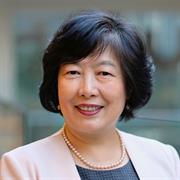
Keynote 1: Advanced Machine Learning for Decision Support in Complex Environments
Distinguished Professor Jie Lu
Faculty of Engineering & Information Technology, University of Technology Sydney, Australia
Abstract:
This talk will present how advanced machine learning can innovatively and effectively learn from complex data to support data-driven decision-making in uncertain and dynamic environments. A set of new autonomous transfer learning theories, methodologies, and algorithms will be introduced to enable knowledge transfer from multiple source domains to a target domain through the construction of latent spaces, mapping functions, and self-training mechanisms, thereby addressing substantial uncertainties in data, learning processes, and decision outputs. In addition, a new suite of theories, ethodologies, and algorithms for concept drift detection, understanding, and adaptation will be discussed, focusing on how to manage continuously evolving data stream environments with unpredictable pattern changes. These approaches can detect concept drift accurately and in an explanatory manner, identifying when, where, and how drift occurs and enabling timely adaptive responses. These advanced machine learning capabilities have been applied to develop a range of real-world applications across multiple industry sectors, significantly strengthening data-driven prediction and decision support systems.
Speaker Bio:
Distinguished Professor Jie Lu is a world-renowned scientist in the field of computational intelligence, best known for her contributions to fuzzy machine learning, transfer learning, concept drift, recommender systems, and decision support systems. She is an IEEE Fellow, IFSA Fellow, Australian Computer Society Fellow, Australian Laureate Fellow, and Australian Industry Laureate Fellow. Professor Lu is the Director of the Australian Artificial Intelligence Institute (AAII) and Director of Australian Research Council (ARC) Research Hub in Responsible AI for a Sustainable Grain Industry (gRAIn) at the University of Technology Sydney (UTS), Australia. She has published six research books and over 500 papers in leading journals and top conferences; won ten ARC Discovery Projects and one ARC Linkage Project as Lead Chief Investigator, an ARC Research ITRH as the Director, and over 30 industry-funded projects; and supervised 60 doctoral students to completion. Professor Lu also serves as Editor-in-Chief of Knowledge-Based Systems and the International Journal of Computational Intelligence Systems. She is a highly sought-after keynote speaker and has delivered over 40 keynote addresses at major international conferences. Her honours include three IEEE Transactions on Fuzzy Systems Outstanding Paper Awards (2019, 2022, 2025), the NeurIPS 2022 Outstanding Paper Award, Australia’s Most Innovative Engineer Award (2019), the Australasian Artificial Intelligence Distinguished Research Contribution Award (2022), the NSW Premier’s Prize for Excellence in Engineering or Information and Communication Technology (2023), the iAwards 2025 NSW Merit Recipient in the Technology Platform category, and appointment as an Officer of the Order of Australia (AO) in the 2023 Australia Day.
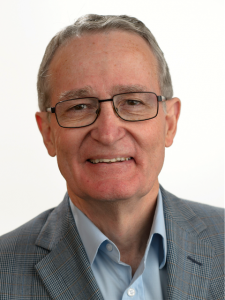
Keynote 2: Energy Transition Systems– from automatic control to AI
Professor David John Hill
Department of Electrical and Computer Systems Engineering, Monash University, Australia
Abstract:
The field of decision and control has played a critical role in establishing the electrical power grid, which has been referred to in terms like “the largest”, “the most complex” machine made by humans. The stability analysis and control of the electrical grid have evolved over about 100 years via solving problems arising in its development into a wide-area granulated network operated by layers of control and market mechanisms. Now in many parts of the world, the electrical system is undergoing a major transition to one featuring high use of variable renewable energy (VRE) sources with 100% levels being proposed in countries such as Australia. The new sources replacing coal based plants include Renewable Energy Zones (REZ) on the bulk grid and the highest per capita uptake of rooftop solar photovoltaic in the world at community level. These sources are supported by new methods of energy storage at all levels from households to the bulk grid. These technologies and associated changes in policies, regulations and markets are already making the aforementioned analysis and control methods and structures obsolete. The future control problem can now be viewed as basically an end-to-end distributed one using available flexibility in generation, network and demand-side resources, all embedded in the changing climate and weather system which features periods of wind lulls (dunkelflaute) and new levels of extreme events. To complicate the problem even further the availability of equipment internal models is much less than previously due to manufacturer non-disclosure. This all creates an unprecedented level of complexity in planning and operation of future grids, which engineers can see but is not part of a more optimistic public conversation. Nevertheless, there are many new opportunities for research and development, which will use systems, decision and control and related computing sciences. And uppermost here is consideration of the potential for use of diverse data and Generative AI. The talk will firstly review power network dynamic analysis and control around the themes of exploiting network structure, data availability and recent learning (and AI) approaches to address the classical problems of computing stability limits for synchronization, frequency and voltage stability. Then the opportunities for research on the new problems arising in the energy transitions will be addressed.
Speaker Bio:
David John Hill holds the position of Professor of Electrical Power and Energy Systems at Monash University, Melbourne, Australia. He is also Professor Emeritus at The University of Sydney, a Life Fellow of the Institute of Electrical and Electronics Engineers, USA, a Fellow of the Society for Industrial and Applied Mathematics, USA, the International Federation of Automatic Control, the Asian Control Association, the Australian Academy of Science and the Australian Academy of Technological Sciences and Engineering. He is also a Foreign Member of the Royal Swedish Academy of Engineering Sciences. He received the 2021 IEEE Power and Energy Society Prabha S. Kundur Power System Dynamics and Control Award and the 2022 IEEE Control System Society Hendrik W. Bode Lecture Prize.
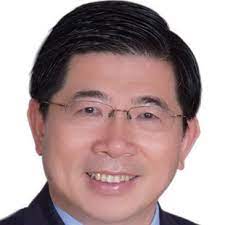
Keynote 3: Physical AI and Robots are Ushering Automation to Autonomy in a New Wave of Technologies and Opportunities
Professor Ren Luo
Department of Electrical Engineering at National Taiwan University
Abstract:
In recent years, ‘Physical Artificial Intelligence’ has emerged as a core driving force behind technological and industrial innovation. Following on from Perception AI, Generative AI and Agentic AI, Physical AI is no longer content merely to perform computations, analyses or content generation within the digital world; instead, it emphasizes that ‘intelligent systems must possess a body’—that is, the ability to perceive, move and operate within the real physical environment from automation to autonomy fashion. Typical forms of Physical AI include humanoid robots, Autonomous Mobile Robots (AMRs), drones and autonomous vehicles, all of which represent AI’s transition from abstract computation to an embodied stage, which means physical AI and robots are ushering automation to autonomy in a new wave of technologies and opportunities. Given the diverse range of physical AI robots, their potential applications are extremely wide-ranging. Through physical AI systems such as humanoid robots, drones and autonomous vehicles, their scope extends not only to traditional industrial manufacturing, warehousing and logistics, but also to commercial services, urban transport, public safety, the medical and care sectors. This cross-disciplinary and cross-sector versatility has significantly enhanced the market potential of physical AI, making it a focal point for both capital and the media. The aforementioned issues, challenges and opportunities will be discussed including some research results from our NTU intelligent robotics and automation (iCeiRA) Lab.
Most of today’s robots rely on inherent programs to set up and carry out tasks, but sometimes are having difficulty to use in different kinds of scenarios. Recently the development of AI enabled large-scale models has given robots the ability to be applied to more complex scenes. That is, the robot will rely on the large model to give embodied artificial intelligence, which means that the robot has intelligent behavior and adaptability, and it can interact with the environment and implement actions. It is estimated that the global market size of robots in the intelligent manufacturing automation and many services such as hospital, elder care, hotel, restaurant etc. will reach tens of billions of dollars per year after 2030. It is perceived that embodied intelligent robots consists of components such as controllers, robotic arms, and dexterous hands to achieve perception and interaction with the environment. Enhanced by artificial intelligence, they have the capabilities of semantic understanding, human-computer interaction, and autonomous decision-making to achieve task understanding and response. Intelligent manufacturing automation will become the first area of large-scale application of embodied robots. Due to their relatively standard structured scenarios in the field of intelligent automotive manufacturing automation in which there are already many applications for example in chassis assembly, appearance inspection, etc. The aforementioned issues, challenges and opportunities will be discussed including some research results on intelligent robotics control and manufacturing automation with video demo from our NTU intelligent robotics and automation (iCeiRA) Lab.
Speaker Bio:
Prof. Ren C. Luo, an IEEE and IET Fellow, received Dipl.-Ing. and PhD in EE from the TU Berlin, Germany. He is an Irving T. Ho Chair Professor at National Taiwan University; He served as Chief Technology Officer of FFG Inc., the world 3rd largest machine tool manufacturer. and was CTO of ASUS corporation. He has served two-terms as President and Dean of Engineering at National Chung Cheng University., one of the major universities in Taiwan, and Founding President of Robotics Society of Taiwan. He was President of IEEE Industrial Electronics Society. Prof. Luo have served as an assistant, tenured associate professor and Full Professor of Dept. of ECE at North Carolina State University, Raleigh, USA. He was Toshiba Chair Professor in the University of Tokyo, Japan. Prof. Luo’s professional expertise includes AI enhanced intelligent robotic control systems, multi-sensor fusion, intelligent manufacturing automation technologies. He has authored over 550 papers, published in refereed international Transactions/ Journals, Conferences. Prof. Luo has served 6 years as Editor-in- Chief of IEEE Transactions on Industrial Informatics (JIF 12.30) and 5 years EiC of IEEE/ASME Transactions on Mechatronics. Prof. Luo received numerous international awards including IEEE Eugene Mittelmann Outstanding Research Achievement Award, IEEE IROS Innovative Technologies Award; ALCOA Company Outstanding Engineering Research Award, USA. He also served as General Chairs for a number of IEEE sponsored major international conferences such as IROS1992, IROS2010,ICRA2003, IECON2007, INDIN, ICPS etc.
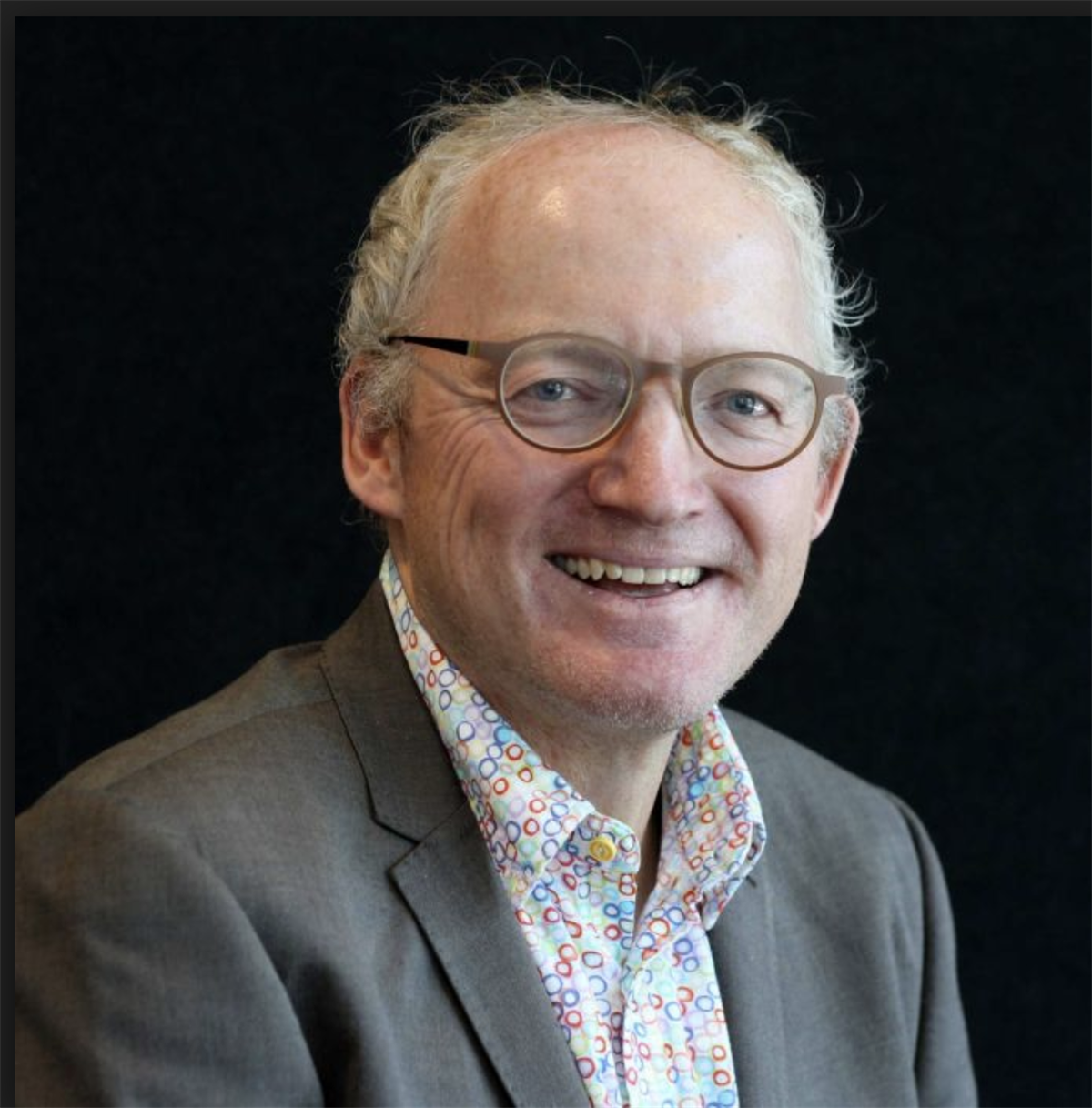
Keynote 4: The AI Race
Professor Toby Walsh
School of Computer Science and Engineering, The University of New South Wales, Australia
Abstract:
Billions of dollars are being spent on AI every day. This is without precedent. And it is transforming every aspect of our society. From work to war, and everything in between, AI is taking on tasks once reserved for humans. As a result, many people are becoming worried. Will this race end in the bubble bursting? What happens when machines outsmart us humans? In this talk, I’ll discuss the likely outcome of the AI race. I’ll suggest that there is a better way to go about building artificial intelligence that matches and perhaps exceeds human intelligence, and this other path is an opportunity for middle powers to stay in the game.
Speaker Bio:
Toby Walsh is Laureate Fellow and Scientia Professor of Artificial Intelligence at the Department of Computer Science and Engineering at the University of New South Wales, research group leader at Data61, adjunct professor at QUT, external Professor of the Department of Information Science at Uppsala University, an honorary fellow of the School of Informatics at Edinburgh University and an Associate Member of the Australian Human Rights Institute at UNSW.